





Telephone Spoofing Scams
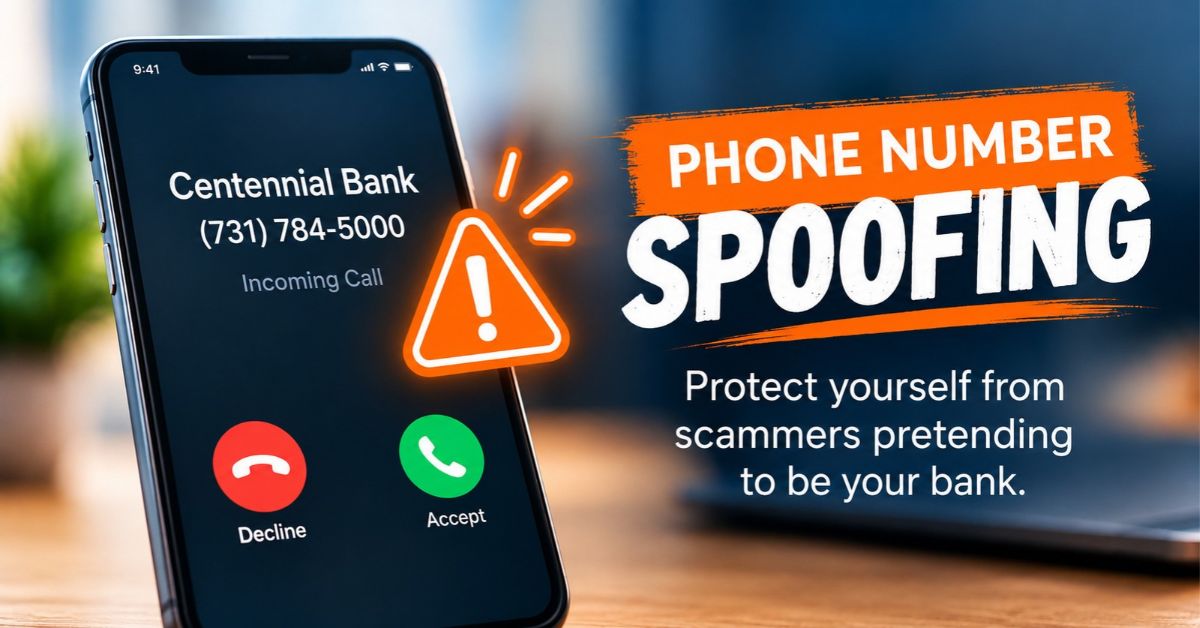
Don’t Trust Caller ID: Protect Yourself from Telephone Spoofing Scams
Scammers Can Make It Look Like Centennial Bank Is Calling
At Centennial Bank, protecting our customers and their financial information is a top priority. As financial scams become increasingly sophisticated, we want our customers to be aware of a growing threat known as telephone number spoofing.
Telephone spoofing occurs when a scammer manipulates caller ID information to make an incoming call appear to originate from a trusted source, such as Centennial Bank. In some cases, the caller ID may display our bank’s actual telephone number, making the call appear legitimate.
Just because your caller ID says Centennial Bank does not mean the call is actually coming from us.
How Does Telephone Spoofing Work?
Scammers use technology to disguise the telephone number displayed on your caller ID. They may impersonate a bank employee, fraud specialist, or security representative and claim there is suspicious activity on your account.
Their goal is to create a sense of urgency and convince you to provide confidential information or take actions that could compromise your accounts.
For example, a scammer may tell you:
- Someone is attempting to access your online banking account.
- A fraudulent transaction has been detected.
- Your debit card has been compromised.
- Your account will be frozen unless you verify your information.
- You need to provide a security code or transfer money to protect your funds.
These claims are designed to gain your trust and pressure you into acting quickly.
How Do Scammers Know Where You Bank?
One of the most concerning aspects of these scams is that criminals may already know personal information about you, including where you bank.
This information can come from several sources:
Compromised Email Accounts: If a criminal gains access to your personal email, they may discover bank statements, transaction notifications, or other communications that reveal your banking relationships.
Compromised Personal Devices: Malware or unauthorized access to a computer or mobile device may expose financial information stored on that device.
Data Breaches: Information obtained through breaches involving retailers, service providers, or other organizations may help scammers identify potential victims.
Social Engineering: Criminals may gather information through social media, previous scams, phishing messages, or other publicly available sources.
Important: A caller knowing your name, where you bank, or even certain account details does not prove that the caller is a legitimate bank employee.
Warning Signs of a Spoofing Scam
Be cautious if someone claiming to represent Centennial Bank:
- Requests your online banking password, PIN, or verification code.
- Asks you to transfer money to another account to keep it safe.
- Pressures you to act immediately to avoid losing access to your funds.
- Asks you to provide remote access to your computer or mobile device.
- Tells you not to discuss the situation with anyone.
- Instructs you to provide false information to a bank employee about the purpose of a transaction.
Centennial Bank will never ask you to provide your online banking password or one-time security code over the telephone, or instruct you to transfer money to a “safe account” to protect your funds.
What Should You Do If You Receive a Suspicious Call?
1. Hang Up Immediately.
If a call seems suspicious, end the conversation. Do not feel pressured to continue speaking with the caller.
2. Contact Centennial Bank Directly.
Call the bank using a telephone number obtained from our official website, your bank statement, or another trusted source. Do not rely on the number displayed on caller ID or a callback number provided by the caller.
3. Never Share Security Codes or Passwords.
Do not provide online banking credentials, one-time verification codes, or other sensitive information to an unexpected caller.
4. Do Not Transfer Money Based on a Telephone Request.
Scammers may claim that moving money is necessary to prevent fraud. Never transfer funds based solely on instructions from an unsolicited caller.
5. Report Suspicious Activity.
If you believe you have been targeted by a scam or have disclosed sensitive information, contact Centennial Bank immediately so we can help assess the situation and take appropriate precautions.
Your Security Is Our Priority
Telephone spoofing is a reminder that even familiar telephone numbers cannot always be trusted. Criminals continue to develop new methods to impersonate financial institutions and deceive customers.
At Centennial Bank, we remain committed to educating our customers, identifying suspicious activity, and helping protect your financial well-being.
Remember: When in doubt, hang up and call us directly.
Your financial security is too important to leave to chance.
Centennial Bank
Better Banking for Life